 |
| Moses the giant Nile crocodile |
We slept well although the hippos roared most of the night in the stream that our room overlooks. We were awake by 5:30 and were dressed before the 6 am wake-up call. We were escorted to breakfast and had porridge, dry cereal, fruit and breads. We met with travel mates, Alex and Rebecca, as well as our guide, Joe, at the boats to go for a wildlife walk which was about a 30 minute boat ride away. We were also joined by Zambo, a shooter. He and Joe were armed with H & H .375 rifles in case of danger. We saw the large crocodile, Moses, on the boat ride as well as several colorful bird species.
 |
| Zambo with a hippo skull |
We got out of the boat and walked single file around the island observing elephants, red lechwe, wart hogs, baboons and many birds. Joe told us that the big predators are confused by people walking in a single file line about a meter apart. The animals may see us as a large unfamiliar animal and not be aggressive toward us. Unlike our time at Xakanaxa, we were not able to get close to the animals but observed them from 300 yards away. Zambo showed us the skull of a hippo that had been killed by six lions about 2 years ago.
After returning to the boat, we made the return back to Xugana Island Lodge where we had lunch of kofta, fish, lentils and fresh fruit. After lunch, we relaxed, did language lessons and caught up on the journal. We watched the stream behind our tent for interesting birds and were amused by the several banded mongoose playing among the tents.
 |
| Red lechwe |
As usual, high tea was at 3 pm with small chicken sandwiches and semisweet brownies. Mark and I chatted with a couple from New Jersey who were a bit dissatisfied with wildlife viewing here at Xugana. Admittedly, we have not seen wildlife as we expected. However, that is not a focus of this camp. This is a water-based camp and appeals to birders and others who are looking at wildlife along the water. They do not have vehicles to seek out wildlife but choose to use dugout canoes and riverboats. Fortunately, the New Jersey family is going to Xakanaxa in a few days where they will see a lot of wildlife up close. We are sure they will enjoy their time there.
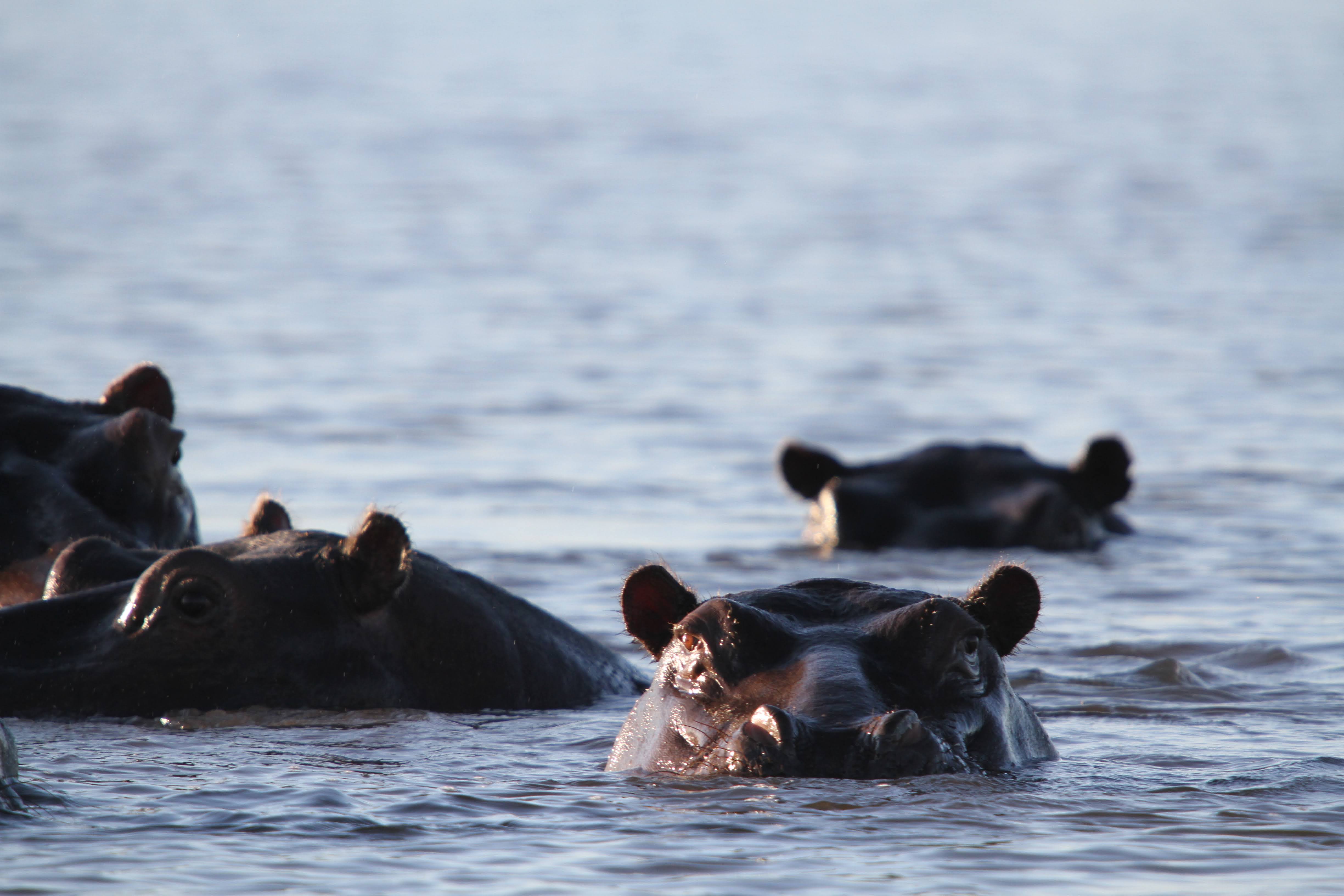 |
| Hippo pod in the Okavango Delta |
Our guide, Joe, met us at the boat dock where we traveled along the rushes, reeds and papyrus viewing birds and eventually, hippos. Joe told us that if the hippos become especially annoyed, they will charge the boat and have even capsized boats. We saw a lot of hippos of all sizes singly and in family groups. As we were warned, one aggressive hippo surfaced inches from our boat, so we moved away quickly. Joe confirmed what we had heard that hippos were among the deadliest animals in Africa.
 |
| African spoonbills |
We came upon a large rookery where every imaginable local bird species was nesting. We took a lot of photos of sacred ibis, African spoonbills, storks and darters. We even watched as an African fish eagle attempted to rob nests of hatchlings but was turned away by attacking smaller birds. It was quite a sight.
 |
| Sundown in the Okavango Delta |
We stopped for happy hour to watch sunset and enjoy gin and tonic or beer to watch the sun go down. Back at camp, we were greeted with scented moist towels. We had become accustomed to the towels at the end of a game drive or other outing. We had a few minutes before dinner, which we used to put away the clean clothing that arrived from the laundry service here.
We were picked up for dinner at 7:15 and had a drink from the bar while we waited for the call to dinner. Because the family from New Jersey was very disappointed in the experiences here at Xugana. They called their travel agent and arranged to spend less time here and more at Xakanaxa where they are likely to see more wildlife. They were to leave for Xakanaxa early tomorrow morning.
 |
| Our tent at Xuganga Island Lodge |
We were picked up for dinner at 7:15 and had a drink from the bar while we waited for the call to dinner. Because the family from New Jersey was very disappointed in the experiences here at Xugana. They called their travel agent and arranged to spend less time here and more at Xakanaxa where they are likely to see more wildlife. They were to leave for Xakanaxa early tomorrow morning.
 |
| Inside our tent at Xugana |
As before, we were treated to traditional African songs and dances followed by an introduction of the staff and an announcement of the meal offerings. Dinner was beef ribs, grilled fish, pearl barley, glazed carrots and garden salad. Dessert was crème brûlée. Everything was very good. Some of our group had wine, but Mary had tonic water with grapefruit, and I had a local liqueur, Amarula. The liqueur reminded me a lot of the bourbon cream liqueur that we enjoy in Kentucky.
Because we were tired and had a busy day ahead tomorrow traveling to Savute Safari Lodge at Chobe National Park, we went to our tents to prepare for bed.
Because we were tired and had a busy day ahead tomorrow traveling to Savute Safari Lodge at Chobe National Park, we went to our tents to prepare for bed.


