Showing posts with label Xakanaxa. Show all posts

Monday, June 16, 2025

Leaving Camp Xakanaxa and arriving at Xugana Island Lodge

We awoke at 5:30 to the bellowing of hippos in the river near Camp Xakanaxa so we finished our packing and prepared to leave in the early afternoon. When I got dressed, I discovered the pin to my watch in my trouser pocket. When the spring-loaded pin came out of the band, it must have bounced into my pocket. I was happy to have found it and quickly put my watch back together. Our guide picked us up at 6:30 to go to breakfast and get instructions for checkout and flight to Xugana Island Lodge.

Steve, Cindy, Mark, GB, Mary, Gav & Mel

Breakfast was oatmeal, fruit and homemade breads. We got in the Land cruiser and met GB for the morning game drive. When he asked what we wanted to do, Mel wanted to see sunrise, I said that I wanted good photos of impala and lechwe. Cindy wanted to see the bushes she thought might be acacia. GB drove along a nearby camping area for sunrise then on to the Fourth Bridge of Moremi National Park where saw the impalas and lechwe, zebras and elephants. We saw a large elephant herd and witnessed elephants mating. We especially enjoyed watching a beautiful saddle-billed stork feeding in a marshy area.

Saddlebill stork

We saw lion tracks in the dirt road and followed them for some distance but lost the tracks a few times before eventually finding the lions. GB thought we might find the cheetahs that we had seen over the weekend in the same area. We drove around the area and saw a couple of jackals and knew that the cheetahs must be nearby. Jackals often lurk around cheetahs to go after the remains of a kill after the cheetahs abandon the carcass. After a search, we saw the two male cheetahs lounging in the shade of a termite mound. We took a few photos then started toward the Camp Xakanaxa. When we stopped for tea near a large baobab tree, Cindy found the shrub with long thorns and confirmed that it is an acacia.

Hammerkopf

We arrived back at Camp Xakanaxa for a lunch of chicken skewers with peanut butter sauce and a vegetable lasagna. The homemade seed bread was especially delicious.

After lunch, Gav and I went to the bar for a glass of Amarula, which is a cream liquor made from the fruit of a Botswanan tree. As we finished our drinks, camp staff picked up our bags and loaded them on the truck. We left gratuities for the staff in the tip box at the office. Our party of four along with Gav and Mel got in the truck and GB drove us to the tiny airstrip near the camps. We said our goodbyes to GB and gave him a special tip for his excellence in locating everything that we hoped to see. We flew the short distance to the Okavango region in a tiny bush plane where we were going to Xagana Island Lodge, while Gav and Mel were going to nearby Camp Okavango. We very much enjoyed our outings with Mel and Gav and promised to exchange photos of our trip.


The Xugana Island Lodge staff picked us up and took us to the camp by boat. We boated past a 15 foot Nile crocodile that the staff calls Moses. We were shown to our tents which are only a few months old following the complete renovation of the camp. We met our new trip mates, Alex and Rebecca, from near Birmingham in central England. We will travel together for the next 2.5 days while we are at this camp.

Cindy and Mark in a mokoro


Upon arrival at Xugana Island Lodge, we were taken on a mokoro ride. This replica dugout canoe was the traditional means of travel in the Okavango Delta. Alex and Rebecca, Mark and Cindy, Mary and I got in our mokoro with a guide who poled us along the shallow river where we saw a crocodiles, tiny Angola reed frogs and a variety of birds including the carmine bee-eaters, possibly the most beautiful bird we had ever seen. The calls of some of the Central African birds seem to be everywhere. One of the common ring necked doves made a call that sounded like “work harder,” “move over” or “drink lager” depending on who was describing the call. Mark and I enjoyed the crested barbet that makes a beautiful trilling whistle. Many African birds are named based on their call. For example, the call of the go-away bird says exactly that.

Traditional African songs and dances before dinner

When we arrived back at Xugana Island Lodge, we were met with gin and tonic as we awaited dinner. Before the meal we were treated with an introduction of the staff and a performance of traditional Botswanan songs and dances.  Like at Camp Xakanaxa, there appeared to be more staff at Xugana Island Lodge than there are guests.  This isn't surprising since both camps are operated by Desert and Delta Safaris, who take pains to assure that each guest's needs are met. 

Dinner was an ostrich appetizer, followed by beef stew, roast pork, butternut squash and homemade rolls. Dessert was pudding with ice cream.


Sunday, June 15, 2025

Lions and cheetahs at Xukanaxa


Female waterbuck

We were awakened at 5:30 on Father’s Day by a nearby lion roaring. We dressed and had our morning beverages before our guide, GB, came to escort us to breakfast at 6 am. There was a good selection of locally made bread, sliced meats, cold cereals and hot porridge. Mark, Cindy, Gav, Mel, Mary and I were in the Land Cruiser with GB by 6:45. We drove over to a camping area to watch sunrise and saw a lot of elephant footprints along the road. We drove through a part of the park that we hadn’t visited on Friday or Saturday. We saw a family of warthogs, many impala, giraffes, lechwe, and elephants. One bull elephant became impatient with us and trumpeted before coming at us. Fortunately, GB was able to get the truck out of the way. We were impressed by a male and female waterbuck moving through the underbrush. These animals are larger than most of the hoofed animals that we have seen here and are best identified by a white circle on their rear.

Helmeted guineafowl

GB decided to take us by the recently killed Cape buffalo that we saw yesterday. It appeared that the buffalo had only been partially eaten yesterday and the lions should still be nearby to continue eating the dead animal. Along the way, we passed several flocks of helmeted Guineafowl. These birds are often kept as domestic barnyard fowl in the US although they tend to remain somewhat wild. Large flocks of Guineafowl are found throughout their native range in Central Africa. When we arrived the entrails of the buffalo had been eaten since yesterday, but we were unable to see the lions who were probably nearby sleeping off the meal. A radio call came through that a leopards was spotted about a 30-minute ride from us, so we left quickly heading for the last place it were seen. GB drove through quickly the bumpy roads in the savanna and got us to the area where it was last seen. Circling vultures told us that a kill was nearby. Thanks to GB’s driving, we found the leopard in less than 20 minutes after we left the buffalo carcass While we watched the leopard, a small herd of impala and a few wildebeest approached until they scented the leopard. A jackal kept a respectful distance from the relaxing leopard.  We were impressed by the power of leopards, not only to catch and take down large game animals bit to hold the prey animal in their teeth and climb a tree.  A leopard will cache an impala or similar game high in a tree to protect the kill from hyenas and jackals.

Leopard

We pulled over near a pond where we watched four hippos, three crocodiles and many impalas, wildebeest and birds. GB prepared tea and a snack for us as we relaxed by the pond.

As we left the pond, we spotted a large female lion crouching on a bank. When we approached and looked through binoculars, we saw that there were two adult lionesses and a young adult male lion. GB alerted other guides in the area of the find as we photographed the three lions basking in the sun. About the time we were leaving, a radio call came that two male cheetahs were near us, so we took off and found them reclining in a shady spot with full stomachs. We took a lot of photos of them before starting back toward Camp Xakanaxa.

Preparing an elegant bush lunch


Just before arriving at the camp, we caught the smell of someone barbecuing. It turns out that the camp staff had prepared a surprise meal outside for us. There was a table set up outside and the staff was grilling chicken wings and beef sausages. We had rolls, salads and a choice of wines, beer or mixed drinks with lunch. The staff sang traditional tribal songs and danced while we were served lunch.

Traditional songs and dance before lunch

We came back to camp happy to find that we did not have baboons and vervet monkeys all over our tents. We relaxed as we read and dozed before our afternoon game drive. As always, tea here is served at 3 pm and the game drive is at 3:30.


Baboon


High tea was vegetable mini pizzas, fruit bars and a selection of fresh fruits. GB met us at 3:15 and said that we would have a low impact leisurely drive in the park. We went through an area with a number of birds, then we stopped to watch a band of baboons crossing the road. We saw a few Nile crocodiles, one of which was over 18 feet long. A slender mongoose, small species of mongoose, was climbing a tree. We asked GB lots of questions about the local plants that we have been seeing. Cindy also asked about many of the birds. Mary, Cindy and Mel checked off animals and plants that we have seen over the past three days. As we drove, GB heard on the radio that there were cheetahs visible again, so we drove the short distance to where two male cheetahs were resting in the shade of a termite mound. We took several photos then continued toward Camp Xakanaxa. 

Happy hour drinks and snacks

GB stopped at a pond where we saw crocodiles, hippos and vervet monkeys. GB served happy hour from a rack on the Land Cruiser at the edge of pond. The gin and tonic with (rusk) shortbread made a very happy hour watching African wildlife. We have become very fond of the local Okavango Gin along with Fitch and Leeds Indian Tonic. Vervet monkeys played all around us then went into trees to spend the night. We watched sundown as we enjoyed our drinks and snacks then returned to the camp.

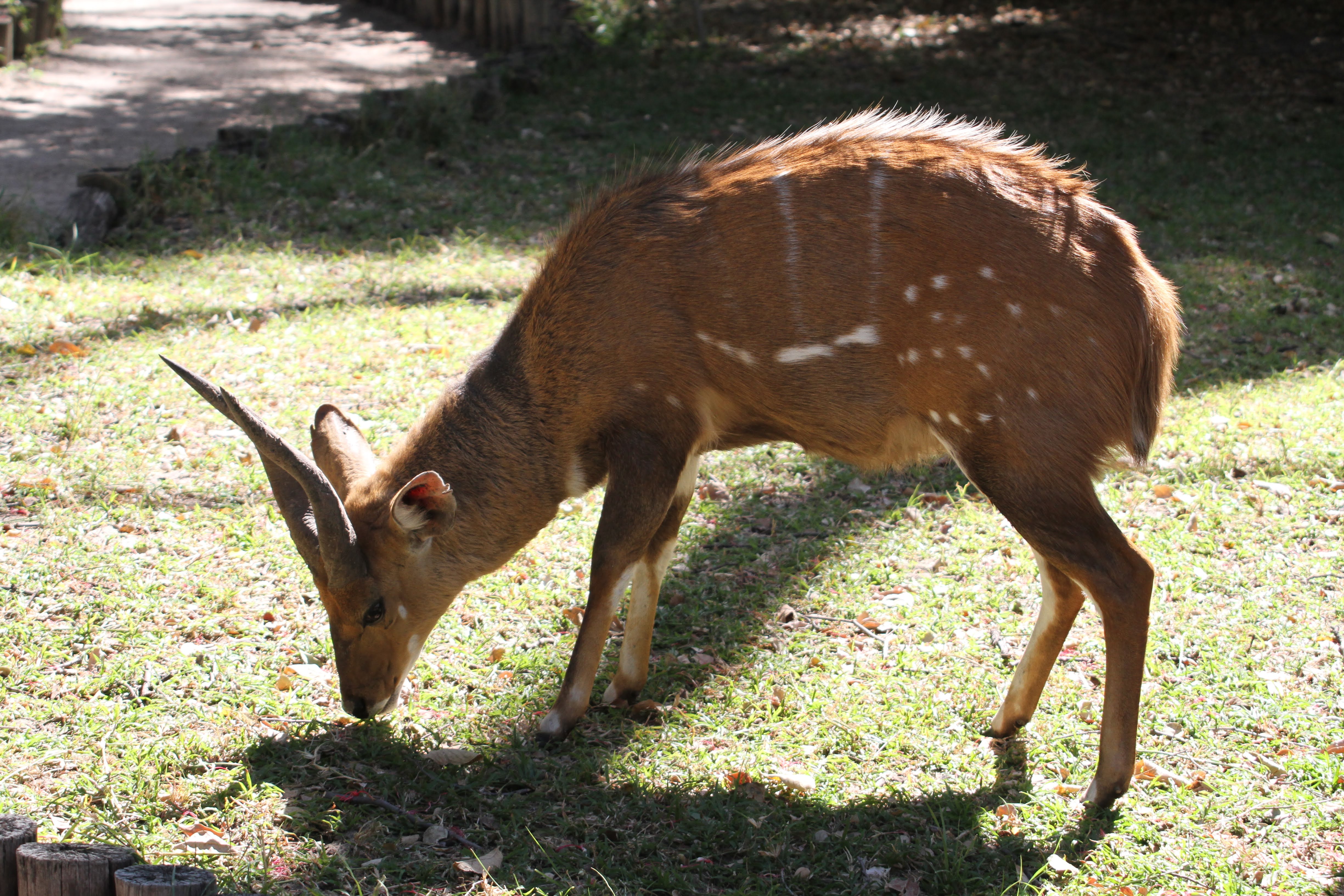
Bushbuck

As we walked through the camp we saw that a bushbuck had entered the area and was grazing in the camp. It just made us think of the game Bushbuck Charms, Viking Ships and Dodo Eggs that Sarah and Emily used to play as children. The bushbuck was a full-grown adult but resembled a young deer.

When we entered our tent, we saw that our laundry had been returned, clean, dry and folded. The room has been straightened, and the mosquito netting had been lowered around the bed. Laundry at the camps is considered a “bush laundry” which is hand washed without a machine, line dried, and ironed.

Oscar the hippo

We were escorted to dinner at 7 pm where we sat at the fire pit and visited with the ladies from California who were on the flight from Maun with us. They had just arrived from their camp in the Okavango Delta. We were interested in hearing about their experiences since we would be going near there for our next camp. At dinner, we met a nice couple from London who just arrived this evening. As I was leaving our tent for dinner, I hooked my watch on the tent and lost a pin holding the watch to the strap. I was aggravated since I like to wear an analog watch when I am out in bright sunlight. Digital watches are not as easy to read in bright conditions. We searched for the pin all around the tent entrance with no success.

Dinner included beef filets, chicken thighs, pasta salad, garden salad and a creamed spinach casserole. The appetizer was butternut squash soup and dessert was chocolate pudding with coffee ice cream. Everything was excellent and the dinner conversation was fun.

We look forward to tomorrow morning’s game drive before we fly out to the next camp at midday.


Saturday, June 14, 2025

Game drive in Moremi Game Reserve

We woke at 6 am when our guide, GB, came by the tent announcing the wakeup call. He came back to escort us to breakfast at 6:30. We don’t know GB’s complete name, but he assures us that it is unpronounceable. Breakfast was a porridge unlike any we had ever eaten but was very good. It was made of cooked grain but was finely ground, almost like cream of wheat. There was a lot of fruit and a selection of breads with breakfast that everyone enjoyed.

Zebra grazing in the savanna

The morning was very cool so were were all in layers topped off by a fleece or jacket. GB provided us with a “bush baby” which is a wrapped warm water bottle as well as blankets in the modified Land Cruiser.

Wildebeest, zebras and impalas


We were in the vehicle for our morning game drive by 7:30 and went into the park. As we were boarding, we saw a large warthog inside the camp digging near one of the tents. We passed large herds of elephants, zebras, impalas, and lechwes. Impalas and lechwes are both types of antelope, but the lechwe is adapted to marshy habitat with wider hooves and shorter forelegs. We came upon groups of giraffes, zebras and the young male lion who had been roaring in the night. We saw several hippos in the shallow water and large herds of Cape buffalo and wildebeest. At one stop we saw several ostriches and warthogs. We stopped at a water hole where we saw a tremendous variety of African wildlife all in one place. It reminded us of the African exhibits at zoos in the US. We assumed that the zoo curators gathered all of the animals that are native to the African savanna in put them in one enclosure. However, we saw that these animals live this way naturally in the wild.

Spotted hyena mother and pups

As we were watching the menagerie of animals at the water hole, GB had a radio call that a mother spotted hyena and pups were out. GB raced us there in the jarring Land Cruiser to see the mother hyena with the two pups playing like any domestic dogs. As with other animals we encountered in the park, we stayed in the vehicle where we could get a good view and not be in danger. GB positioned the Land Cruiser to give us an excellent viewpoint.

African wild dogs


GB had a call on the radio that a pack of African wild dogs had been spotted. Since wild dogs are rare and hadn’t been seen in the park for several months, we raced to the area where they were seen. We were fortunate enough to see the group of young dogs lounging in the sun. A few tsessebe started by, causing the dogs to give chase. Tsessebe are the largest and fastest species of antelope and can sustain a speed of 56 miles per hour. However, since the dogs were young and inexperienced, they failed to make a kill. Experienced packs of African wild dogs are reputed to be among the most successful predators on this continent. One of the young dogs had a GPS tracking collar that park rangers use to monitor the population of the African wild dogs.

Third Bridge entrance to Moremi Game Reserve

We made a stop at the Third Bridge entrance to Moremi Game Reserve for tea and snack before heading back to camp. There were several vehicles at the entrance from several of the camps and guide groups. We had a nice visit then continued back toward Camp Xakanaxa for lunch. We saw even more elephants, giraffes, zebras, antelopes and hippos.

Entrance to Camp Xakanaxa


When we got back to camp our tents were surrounded by dozens of baboons and vervet monkeys that scattered when they saw us coming. Several of the female baboons were carrying young on their backs. There were also some smaller monkeys around.

Lunch was a pot pie with ham, vegetable quiche, lentils and a selection of cheese. A choice of wine was available, but I had a gin and tonic made with the good Okavango gin with lunch. We took a rest and changed into cooler clothes for the afternoon outing on a boat.

Malachite kingfisher

After lunch and a break, the six of us cruised through the Khwai River the stream running along the camp. This includes the Xakanaxa Lagoon, GB was excellent at spotting interesting plants and birds then explaining them to us. Some of the highlights included malachite kingfishers, darters (a type of anhinga), pigmy geese, Jacana (Jesus birds) whose large feet make them appear to walk on water.


The malachite kingfisher is one of the most beautiful birds we have ever seen. The tiny bird’s head is a brilliant blue with a red beak. The small pigmy geese were also brightly colored.

Sunset in Moremi Game Reserve

After being on the river for two hours, we pulled to the bank to watch a beautiful African sunset as we sipped gin and tonic snacking on beef sticks and pistachios. It was a perfect ending to a perfect day. We asked GB to do a trip tomorrow much like today.

Elephant warning us away


We were escorted to dinner at 7 pm with traditional African singing and dancing by the Camp Xukanaxa staff. We sat with a group from Guadalajara, Mexico and enjoyed their company. They were a very fun loving group, some of whom may have been a bit overserved with the special tequila that they brought. Some of their group even joined the staff in singing and dancing. We appreciated meeting them. Dinner was lamb and fish with a selection of delicious sides. The lamb was a little tough and dry for our taste, but the Brits found it to be excellent. We enjoyed the local fish that was poached and served with a light sauce. We had a glass of wine with dinner and had a good time chatting about our day.

Since we were very tired and still somewhat jet lagged from the six-hour time difference, we turned in early and slept well.


Friday, June 13, 2025

Moremi Game Reserve

I woke early and showered before walking back to the terminal to log a virtual geocache and look for potential breakfast choices.

After showering and doing our morning language lessons, we met Mark and Cindy for breakfast. We had considered walking around to find a breakfast place near the City Lodge, but our hotel had a large breakfast buffet for a reasonable cost so we ate breakfast there. We had sausages, potatoes, bacon, lots of fruits and cereals. A cook was preparing eggs to order, so I had a ham and cheese omelet along with a variety of fruits.

Getting our visas for Botswana

We were flying to Maun at noon on Friday the 13th.  We got through security easily at O. C. Tambo International Airport in Johannesburg and boarded the airplane for the 90 minute flight to Maun, Botswana. Upon arriving in Maun, we were met by guides from our outfitter, Desert and Delta Safaris. We would be staying in three Desert and Delta camps during our time in Botswana. The guides got us on a single engine, 12 passenger prop plane to take us to Moremi. Besides the four of us, there was the pilot, our guide, another guide on leave and two teachers from California. We made a quick stop at Okavango near a camp that we will visit next week. The two teachers got out at Okavango and four young men who were traveling to another camp joined our flight. The bush pilot seemed very competent, but the small aircraft was a bit disconcerting.

Bush flight from Maun to Moremi


When we arrived in Moremi Game Reserve at 4:30, we were met by our guide for the day who prepared a snack and lemonade for us. He then took us to meet our regular guide, GB, and a very pleasant couple, Gav and Mel, from South Hampton in southern England. Gav and Mel had already been in Moremi for a few hours and had already seen cheetahs up close. The six of us were in a modified Toyota Land Cruiser set up with a canvas roof, a high torque diesel engine and all terrain suspension. We saw dozens of elephants, and the highlight was seeing two young male lions that were probably brothers. GB told us that while we were in the vehicle, we are not seen by the wildlife as either predator nor prey. We were simply a minor annoyance and were largely ignored. There were hundreds of bird species flying around that we hoped to learn more about.

Adult male lion


Moremi Game Preserve is on the edge of Botswana’s Kalahari Desert and was not what I expected. The view I had of the African landscape came from watching Johnny Weissmuller as Tarzan the Ape Man swinging through the trees. Although the Tarzan movies were filmed in Silver Springs, Florida, I am sure that there are heavily forested areas of Africa that we have yet to see.

Sipping gin and tonic during our first game drive


During a break, GB made excellent gin and tonic for us. Since the tonic is said to be antimalarial, we all had a glass. Surprisingly everyone enjoyed the drink. I usually don’t care for gin but found the local Okavango Gin was really good. As we were nearly ready to go to the camp, GB had a call on his radio that a pair of cheetahs were sighted so we made our way to see the two young male cheetahs. They are really beautiful cats and were not bothered by our presence in the least. In fact, they hardly noticed us or at most were a little curious. We were out in the vehicle until after 7 pm. Since it is midwinter here in the southern hemisphere in June, it was dark by the time we arrived at the camp.

Mary on the porch of our tent

Upon arriving at Camp Xakanaka we were shown our tents which were very nice with a sitting area, elevated bed and a bathroom with a shower. The camp has two shared pools, a lounge with an open bar, areas with fire pits and a large dining area. We were impressed that all three of the camps in Botswana are 100% solar energy. Each camp has a solar array that can serve the client’s tents as well as the kitchen, common areas and offices. They have backup diesel generators but seldom have use for them. The camp here at Xukanaka (pronounced “cock a knock a”), Xugana Island Lodge (pronounced “ku gone a”) and Savute Safari Lodge (pronounced “Sa vu ti”)are all operated by Desert and Delta Safaris.

Dinner at Camp Xakanaxa

Before dinner we enjoyed sitting by one of the fire pits with Gav and Mel. We have really enjoyed getting to know them. Gav is an accountant in England, and Mel is a vice president for the construction of Carnival cruise ships. At dinner we were entertained with traditional southern African songs and dances by the camp staff. The first course was an ostrich appetizer followed by a buffet of beef, pork, eggplant, vegetables, pearl barley, black rice and a selection of wines.

One of Xakanaxa's fire pits


We sat with a group from eastern Germany, and I really enjoyed talking with them in German. I was quite flattered when they asked where I live in Germany. Thomas spoke no English, but he and I could get by on my German. For the past seven years, Thomas has gone big game hunting in Namibia and has taken many trophy animals.

After dinner, we sat by one of the fire pits and chatted with other guests. There were about 20 of us at Camp Xukanaxa, mostly from the UK. We were the only guests from the US at that time.

Adult male cheetah

Camp rules stipulate that a guide must escort us to tents since animals often come into the camp after dark. He cautioned us to be certain to lock our door since open tents are pillaged by baboons. The local hippopotamus, Oscar, also frequently roams the grounds at night. The trip has already exceeded our expectations. The four of us are of the generation that watched Mutual of Omaha’s Wild Kingdom as children. We all wanted to be Marlin Perkins and Jim Fowler traveling through Africa and other exotic locations to learn about the wildlife.

We slept well although a nearby lion roaring woke us at 2 am. The evening was cool in the winter here, but we had plenty of blankets. Even though the air was cool, the staff had lowered the mosquito netting around the bed. We had treated all of our clothing with permethrin spray, but with the cool African weather we doubted that we would be bothered by mosquitos or other insects.