Wednesday, February 26, 2020

Necropolis of Saqqara

We awoke a little before our 6 am alarm and prepared for breakfast and the visits of the day. We met Cindy and Mark in the dining room of the Steigenberger Hotel. I enjoyed the assortment of middle eastern breads and condiments as well as the fresh local citrus and melon.
Entering the Pyramid of Teti
We boarded the bus at 8 am and drove to Dahshur, a major necropolis of the Old Kingdom. This area holds some of the oldest pyramids going back as far as 2600 BC. We first visited the Pyramid of Teti which is in the necropolis of Saqqara. The pyramid is believed to have been constructed in the 6th Dynasty and was about 172 feet tall. However, there has been a great deal of erosion giving the pyramid the appearance of a pile of rocks in the desert. We entered the pyramid by walking down a steep and narrow ramp that was less than four feet high. The ramp was about 70 feet long and was sharply sloped downward to the floor of the pyramid. 
Stars on the tomb ceiling
After entering we were in a small chamber that opened into the burial chamber that had a much higher ceiling with hundreds of stars. The empty sarcophagus was still in the room, but this solid stone box had been opened by grave robbers many years ago.  Although the exterior of the pyramid is in poor condition, the paintings and hieroglyphics are in excellent condition.
Well preserved hieroglyphs 
From there we went the short distance to a mastaba tomb that was a bench tomb mostly above ground.  This type of burial predated pyramids and was used in the Old Kingdom around 3000 BC.  There were many panels on the walls that depicted daily life in the area at that time. We were amazed at the number and quality of carvings on the walls; some of those panels were carved into the plaster that was coated on the rock walls. Especially impressive to us were the depictions of Nile animals. There were carvings of all manner of fish, hippos, crocodiles, birds and other life forms on the anime valley. We learned that the ancient Egyptians always made people look more perfect than in actual life. Stylized figures were all slim, muscular and fair featured. The carved figures in this tomb were so detailed that the muscles in the legs, detailed nails on hands and feet and hair or wigs. Many of the figures still had a great deal of the pigments that were originally applied when the tomb was constructed about 5000 years ago.
Step pyramid of Djoser
We then went to the nearby Pyramid of Djoser, a step pyramid which predated the traditional pyramids. Prior to the step pyramids, rulers were buried in simple above ground bench structures. Pharaoh Djoser instructed his architect, Imhotep to build a tomb that was unique and greater than the bench tombs. Imhotep proposed a series of six steps that would be a stairway to heaven for his spirit. This pyramid was constructed in 27th Century BC during the Old Kingdom, 3rd Dynasty.
Bent Pyramid of Sneferu
From there we went to the Bent Pyramid which, in 2600 BC, was the first attempt in constructing a pyramid with smooth sides in which the steps were covered. Pharaoh Sneferu wanted the sides of the pyramid to be at a 54-degree angle but when the pyramid was about half completed, the instability and developing structure damage was noticed. At that time, the rest of the pyramid was built at 44 degrees giving the structure a bent appearance. Because the pyramid wasn’t perfect, the king ordered another pyramid, the red pyramid, to be built nearby that has 44-degree sides throughout.
We had time to walk around these pyramids and take photos. Since there was nothing to see in any of these pyramids, we chose to not go into either pyramid. We had seen the interior and burial chambers of other pyramids with well-preserved arts and sarcophagus. There were not many tourists here since we were not at the height of the tourist season.
Road Scholars at Pyramid of Djoser
We finished the day by touring the Imhotep Museum which has only been open since 2006 showing artifacts that Imhotep influenced. We were so impressed with the state of preservation of the wooden and plaster items. Since there is so little rain and groundwater, things don’t tend to degrade like in most areas of the US. Imhotep was very skilled in many areas but is best known for his architecture and engineering.
Necropolis of Saqqara
We went to the Saqqara Necropolis which was built perfectly symmetrically. We walked down the entrance with 11 columns on each side to a large courtyard. The legend was that a new ruler had to enter the courtyard with a bull and run the bull down and capture it to prove his strength.
Photobombed
While in the courtyard Mary was taking my photograph when a flock of Egyptian men in traditional clothing jumped into the photo then insisted on a tip for having their picture taken. These people are very skilled at getting money from tourists.
We drove back toward the Steigenberger Hotel in Cairo and stopped for lunch at a small local restaurant, El Ezba. When we entered, we walked passed women making pita breads and singing in the traditional ululation style. The pita breads were inflated to the size of footballs and nicely toasted.
At the restaurant we had an appetizer of pita bread with tahini, baba ganoush and eggplant salad. The main course was a small charcoal grill with beef and chicken all nicely seasoned. There was also rice and small bowls of very good stewed vegetables. We had an assortment of traditional Egyptian confections for dessert.
Ululation and making pitas
A number of cats were around the restaurant that were looking for scraps of food. They looked pretty rough, like they seldom get a decent meal. There was also a small boy with a pony who was offering tourists to ride or take a photo with the pony for a tip. Like many public places, a child was in the restroom area offering toilet paper for a tip.
We got back to the hotel by about 3 pm so we went out for our usual afternoon walk. The main road was very noisy with auto traffic and motorists blowing horns. We decided to get off the main road and walk through the residential area which was a lot more pleasant. We saw a few people out walking or working in the yard. There were still a lot of feral dogs out in the streets. These dogs are not very friendly and often carry diseases. We didn’t approach any of the dogs, but when I pointed to one, he assumed a hostile posture and began barking.
After our walk, we cleaned up for the evening speaker and dinner. We went to a nice meeting room in the adjacent hotel and heard a teacher from one of the Cairo International Schools educating us on Islam. She did a nice job of explaining the origin of Islam and the fundamental beliefs. She closed by discussing the beliefs held by most Christians that Muslims do not respect women and are terrorists.
She said that the Quran dictates the equal rights of women and the ability of own and inherit property, to choose a mate and to become educated and employed. She said that some Muslim cultures take measures that go beyond the stipulations of church law. For example, the Quran instructs women to dress modestly. The women who wear the veils are trying to exceed the requirements of the church law and to hopefully get a better place in heaven. Like many religions, women are required to wear a head covering when entering a mosque or other holy place.
She cited verses in the Quran that run counter to many preconceptions about terrorism indicating that ISIS and other extremists are not following the Quran’s commands to treat all cultures as valuable and to not kill another human. It was all very informative. The Q & A following the talk started to drag, so we excused ourselves to dinner and had a nice meal from the buffet consisting of Egyptian meals. We wanted to get to bed early since we needed to have our luggage our for the porters before 6:30 am. We will be leaving the Steigenberger Hotel in Cairo and heading toward Alexandria.


Tuesday, February 25, 2020

The Great Pyramids of Giza


We both slept well but could have slept even later had we not set an alarm on my cell phone. After getting so little sleep on Sunday night we were happy to get a full night on Monday.  The seven hour difference in time between Cairo and Eastern US time made it challenge for us to adjust.
When we looked out of the window of our room at the Steigenberger Hotel, we were surprised to have a balcony looking out over the Pyramids of Giza. We didn’t realize how close our hotel is to the pyramids.
We met Mark and Cindy in the dining area of the hotel. There was a good mix of traditional Egyptian and western breakfast items. We enjoyed the cooked cereal grains and fresh fruits for breakfast. We had only a few minutes to come back to the room to get ready for our outing for the day. We were to meet our guide, Eman, before 8 am to hold a preliminary group discussion before we board the bus. We thought we were going to have to have the hotel open the guest room safe for us, but we managed to enter our code and retrieve our cash for the day. When I asked the clerk at the front desk about the safe, I thought she said that “Michael League” would be up to check on it.  It was only later in the week when another hotel employee said that Michael League would be up to get our luggage that I figured out that they were saying “my colleague” would be doing something.
We had a short meeting with the trip leader to learn more about the plans and expectations and to meet the other participants in our group. There were four clusters of people: a group of seven from the Albany, NY area, the four of us, three ladies from Southern California and a couple from Montreal. Everyone seems very nice, although like some other trips we have taken, we are the youngest people on the tour. We ran to an ATM at the hotel to change some US dollars into Egyptian pounds as soon as the meeting was over.
We boarded the bus at 9 am and met our bodyguard for the trip. We took the short ride to the area of the three large pyramids of Giza and the Sphinx of Giza. Eman purchased our passes, and we passed through security to enter the grounds of the pyramids. We heard about the history of the pyramids, the pharaohs and the people who built them. We learned that the builders were not slaves but were well paid and had benefits. We saw evidence of the mud ramps that may have been constructed to allow the large stone blocks to be transported up the pyramids.
We were able to go up to the pyramids and even climb up on them a short distance. The close tolerance of the individual blocks was impressive since each huge stone was individually carved to fit a certain spot in the pyramid. We learned that there were four areas of a pyramid complex: the ramp, embalming area, the funerary area and the burial pyramid. The ancient Egyptians didn’t believe in death but that the body and spirit would be temporarily separated until the spirit returned to the body and restored it. Since Eman was educated in archeology and was a former student of Dr. Zahi Hawass, the well-known Egyptologist and former Egyptian minister of antiquities, she was well versed to educate us on the history of the area.
We walked around several areas of the pyramids and took a lot of photographs. We found a few places where we could stand and have great views of the Pyramids of Khufu, Khafre and Menkaure.  There were a lot of vendors trying to persuade us to buy trinkets, books or other items. Others tried to get us to take pictures for a tip of few dollars. Eman advised us to not purchase anything from street vendors but to get mementos from reputable shops that have items that may cost a little more but will be made in Egypt rather than China.
We went to an area near the pyramids and took a ride on camels out to the pyramids. The Dromedary (one hump) camels kneeled for us to mount using a single stirrup. The camels raise their hind legs first followed by the forelegs. It is a very unsteady feeling, especially when the animal is tilted very far forward before the forelimbs have raised. My camel, Casanova, was very well behaved and took my commands well. The camel livery man didn’t have me stay in the string of camels but allowed Casanova and mw to ride around a bit. The camel herders took photos of us on our camels then started us back to the rental area. The four of us really enjoyed the camel ride, although many people in our group were anxious over being on such a large animal. I didn’t get the feeling that anyone else in our group had ever ridden a horse before.
After we returned the camels, we took the bus the short distance to the solar boat museum that housed the 143 foot long boat that was constructed to carry pharaoh Khufu into the afterlife. Actually, this is one of five identical boats for that purpose. Five were built so there would be backup boats in case some were discovered or destroyed. This boat is built entirely of cedar wood imported from Lebanon over 4500 years ago. Many of the cedar planks are gigantic in both length and width. The boat was discovered in 1954 in a stone enclosure that was covered with 22 large stones forming a cap to the container. The boat was remarkably well preserved with all of the wooden pieces intact and reassembled. Even the ropes made of twisted grass fibers that hold the oars in place were in good shape. Only one of the 12 huge oars was damaged. Most wooden and rope components look as though they could be made seaworthy easily. Not bad after being buried for over 4500 years. Like most places we visited in Egypt, we had to pass through security including a metal detector and x-rays of our bags.  However, we also had to wear large canvas overshoes to prevent marring the floor of the museum.  We found wearing the oversized shoes to be comical making us look rather duck-like.
We then drove to the Sphinx of Giza. The area around the Sphinx was the quarry where stone was cut for the construction of the pyramids. While the Sphinx appeared small when compared to the Pyramid of Khufu, it is actually 66 feet tall and 240 feet long facing directly west to east. Because the limestone of the Sphinx is not very durable, it has been badly weathered. In addition, there has been damage from vandals and robbers for thousands of years. Like many of the other features of the area, the Great Sphinx was built around 2500 BC.  We walked around and took photos before boarding the bus back to the Steigenberger Hotel.
We had a nice lunch at a private area on a sunny deck at the hotel. We had fresh flatbread with tahini and other spreads, grilled chicken, shish-kebab beef and seasoned ground beef called kofta. For dessert we had a large cup of diced local fresh fruits topped with ice cream.
We feared that we would just fall asleep if we went back to the room, so we went out for a walk near the hotel. The main highway was very noisy with motorists constantly blowing horns. There were all sorts of cars, trucks, donkey carts and all other means of conveyance that made the walk deafening. Because of the noise we cut our walk short and came back to the room where Mary and Cindy played cribbage until time for our evening speaker.
The speaker was in the meeting room space next to our hotel. He a geology professor at American University at Cairo who is an authority on the Nile River. His shared his knowledge on the history of the river and the importance of the river to the economy, history and culture of Egypt. He also discussed the changes that came as a result of the Aswan High Dam and other methods to control flooding of the Nile. He was a very interesting speaker, but we were so tired that we didn’t get to be as attentive to his talk as we otherwise should have been.
We got to dinner a little before 7:30 and had a good assortment of Egyptian meal items and good tea before heading into bed.

Monday, February 24, 2020

Arriving in Cairo

As we were preparing for landing in Rome, Cindy was digging in a little used part of her carry-on bag and found her phone and wallet. We guess that the battery was dead before she missed it since we called it several times while in the JFK airport the evening before. In any case, she was happy that she didn’t have to cancel credit cards and get her driver’s license and Global Entry cards replaced.
We arrived in Rome on time and found our way to our concourse for our flight to Cairo. They do not post the departure gate until 75 minutes prior to departure, so we waited in the general area after going for a walk around the airport. Our flight loaded quickly and made a departure only slightly later than scheduled. The small airplane was full and the seats were not as roomy as the larger aircraft that we took to Rome, but since the flight was less than 4 hours we didn’t mind much. The lunch that was served onboard was very good with a selection of soft cheeses on breads, fruit cups and sweet treats. They offered Italian wine that served a large tumbler at no additional charge.
Flooding in the streets of Cairo
On arriving in Cairo we were checked by the Egyptian Quarantine Team for the coronavirus. We had to fill out forms on our health history and where we have traveled recently. After passing through that we were met by the greeter from Road Scholars who took us through the process to purchase Egyptian travel visas. We picked up our bags quickly and made our way to the van that would take us on the 90-minute drive from the airport in Heliopolis to the Steigenberger Hotel on the west of Cairo. However, the rain and traffic in Cairo required a change in plans. Each year, Cairo gets 10 centimeters of rain. Seven centimeters of that rain fell in a three-hour period today. While traffic in Cairo is always a mess, being out during rush hour on a Monday when most streets were flooded was impossible. Cars and scooters were submerged, stalled and incapacitated making the problems even worse. Everyone constantly blows horns and weaves in and out of traffic with no regard for safety. Several times, pedestrians, donkey carts or scooters darted right in front of our van. It was amazing the police were mostly ignored and no one was moving.  We spent a lot of time just sitting in traffic or moving a less than five miles per hour. The 90 minute drive to the hotel in the Giza region of Cairo took well over four hours.
View from our hotel room
Upon arriving at the Steigenberger Hotel we were met by Eman Elmaleh, the trip director and Mohammad, the Cairo contact for Road Scholars. Both were very welcoming and helpful making sure that we were prepared for the days ahead. After getting into our rooms. we had dinner in the hotel dining room. The food was mostly Egyptian items, and we all found things that suited us. We were pleased that the buffet had a good variety and was well prepared but wasn’t obscene like some of the places we visited in China or Germany on other trips.  We chatted briefly with three ladies from Southern California who had also arrived late and were eating a late dinner in the Steigenberger dining area.
We turned in as soon as we got to the room and slept well since neither of us had much sleep the night before. We were very much looking forward to tomorrow when we will be visiting the pyramids and the Sphinx here in Giza.

Sunday, February 23, 2020

Leaving for Egypt


We left home around 9:30 am to make the hour drive up I-75 to the Cincinnati airport. We parked at our usual source OneStopParking at the Hilton off Turfway since we can park for about $5 per day and the free shuttle is reliable. Our drive was uneventful, and the short trip to the airport from the Hilton was pleasant since we rode with two pilots how shared interesting stories of some of their pleasure travels.
The Global Entry pass was great since we went straight through airport security with no line then didn’t have to take shoes or jackets off. We also didn’t have to take anything out of our carry-on bags. We had some time in the airport before our 2 pm flight departed so we ate the lunch we packed and walked around between the concourses until our flight to New York.
We got to JFK airport a little ahead of schedule and waited for Mark & Cindy to arrive. They had come to New York a few days earlier and had taken time to visit a few sites including the memorial at the site of the World Trade Center. They met us at our gate then we went to one of the airport vendors for dinner, Mary & I had salads then split a sandwich. Mark & Cindy were not very hungry because they had eaten a large lunch while sightseeing earlier, so they just had a snack.
After leaving the airport food court and returning to our departure gate, Cindy realized that she had lost her wallet and cell phone. She and Mark ran back to the food court and bathroom to search for the missing items with no success. The wallet had her credit and debit cards, driver’s license, Global Entry ID and several hundred dollars in cash. She was pretty disappointed to have lost them but was glad that she had put her passport in her carry-on bag and could board our red-eye flight that was leaving at 7 pm.
Our flight was uneventful with Mark and Cindy in the seats behind us on the flight. The seats were fairly comfortable, but neither of us had much success in getting much sleep. I watched “The Current Wars” and a little of the animated “Addams Family” movie. Mary watched “Maleficent 2” and Amazing Grace, the Aretha Franklin documentary which she enjoyed.  We tried to sleep some but without much success. 


Wednesday, January 29, 2020

Returning Home - Day 2


We awoke around 4:30 at the Cartersville, Georgia Day’s Inn and quickly got on the road after making a couple of cups of tea and taking quick showers.  We were traveling north on I-75 before 5 am.  We figured the earlier we got through Knoxville the better we would be.

Although Knoxville wasn’t nearly as bad as Atlanta driving, we were happy to be through the city early in the morning.  We passed by Corbin, Kentucky, and thought about Colonel Sanders and the origin of KFC.  When we got to Mt. Vernon, Kentucky, we looked up the shows that would be coming to Renfro Valley soon and considered going to a show there.  We were especially interested to see that the Oak Ridge Boys would be there and that tickets are very reasonably priced.

We made it to our Georgetown, Kentucky home a little after 10 am.  We spent much of the morning unloading, packing the frozen wild boar meat into the chest freezer in the basement and calling family to let them know we were home. 
We were pleased that the meat remained firmly frozen and that most of the dry ice that we purchased on Wednesday morning remained in the cooler.  We could probably have done with far less dry ice, but we didn’t want to take a chance in case the trip was delayed for any reason. 

As always, we were happy to be back home although the temperature in the 30s was not like the 70s that we were enjoying in Florida.  The forecast is even calling for a few flurries in the next few days.  However, by Sunday we may see temperatures approaching 70 degrees but will have another cold snap by mid-week.  That is typical February weather for Central Kentucky. 

Along the 15 hour drive Mary and I reflected on the trip and the good times we shared with our friends there.  We value our friendship with Steve and Marcia and look forward to seeing them when they come to Huntington in May.  The hospitality they showed to us was sincere and warm.  We were made to feel welcome in their home. 


Tuesday, January 28, 2020

Returning Home - Day 1


Mary and I awoke around 6 am and had a breakfast of cereal and tea from the Keurig machine.  We started packing a few things in preparation for our return drive back home to Georgetown, Kentucky. 

At 8 am Steve and I left to pick the processed wild boar from the Meat Shack in Okeechobee.  We picked the meat up and paid the $95 processing fee to grind most of the two hogs and prepare the tenderloins.  After getting the meat in the cooler, we stopped at a nearby Publix grocery store to get dry ice and duct tape to seal the cooler.  We also got several paper grocery bags to keep the dry ice spaced from the wrapped packages of meat.  Although the dry ice was a bit pricy, we wanted to assure that the meat didn’t spoil on the two day drive back to Georgetown, Kentucky. 

While we were gone, Mary had packed up our things and readied us for the 15 hour drive.  Although we had a Cadillac SUV for a rental, the space was limited with the coolers and all of our gear and clothing.  We got on the road by 11:30 am.

We drove east on Rt. 64 to I-75 where we drove north toward Atlanta.  The orange groves and cattle farms made for a pretty drive for us.  We ate our Walmart sub and fruit along the drive for lunch.  We got to Atlanta around 8:30 pm where we found traffic to be bad even at that hour.  We wanted to get through the city so we wouldn’t have to go through there on Wednesday morning. 

We stopped at Cartersville, Georgia just north of Atlanta and got a room at the Day’s Inn.  The room was fine since we would only be there long enough to get a few hours of sleep and the rates were good. 


Monday, January 27, 2020

Highlands Hammock State Park


Marcia had to take the “hippy bus” into town to get the crank window apparatus repaired so Mary ran into town with her.  Steve and I went to Walmart to get groceries for the pulled pork dinner than Marcia was planning.  We also went to Lowe’s to get a replacement dryer vent hose and a 90 degree fitting since the hose that we reconnected last week failed the first time that a load was run in the dryer.

After we returned to Steve’s house, we packed a lunch of sandwiches and fruit to head to Highlands Hammock State Park.  This 9,000 acre park is best known for trails through old sour orange groves and ancient forests of giant live oak trees. 

We started our visit at the small CCC Museum, where exhibits describe the role of the Civilian Conservation Corps in the 1920s to build this and many other parks across the country.  There were displays of the tools and techniques used by the young men working in the CCC during the Great Depression.  One of the things that we enjoyed most was a loose leaf binder with information on CCC projects organized by state. 

We drove around the road, stopping to view areas that were likely to hold alligators, snakes or birds.  Because the weather had been unusually cool and dry, there were fewer alligators than when Steve had visited before.  We saw a red-shouldered hawk on the side of the county road.  The bird flew up into the trees when we neared but didn’t move far then returned to his spot after we passed.  We could not see what the hawk was after there, but it was interested in something at that spot.

There was a boardwalk through one of the areas of the hammock that is a wetland.  The boardwalk was secure but had a rail only on one side which made Mary a bit uneasy.  We saw several people along the walk but not many.

We moved on to the Ancient Hammock Trail where we saw several huge trees that had probably been there for many hundreds of years.  We talked with a couple visiting the area from Louisville and pointed out many spots where wild pigs had caused significant damage to the forest.  We picked one of the sour oranges and found it to have a good orange flavor but was very sour. 

When we got back to Steve’s house, we chatted with Marcia who had been working out in her small office out back while we were out.  She had made pulled pork in her instant pot while we were out.  We had an early dinner of pulled pork sandwiches, coleslaw, potato salad and chips.  Everything was very good.

After dinner, Steve took Marcia to pick up her van while Mary washed dishes and I connected the new dryer vent.  We visited for a while then Marcia went back out to her office to work while Steve and I watched the movie, The Missing, on Netflix.  I enjoy any movie with Tommy Lee Jones and this was an interesting western.  By the time the movie was over around 10:30 Marcia came from her office and everyone was ready to turn in for the night.


Sunday, January 26, 2020

Brevard Zoo


We checked out of the Day’s Inn Titusville at 8:45 and drove the 30 minute trip south on I-95 to the Brevard County Zoo in Melbourne.  Our Cincinnati Zoo membership got us half price admission to the zoo when it opened at 9 am.

The Brevard County Zoo is only 25 years old and is still growing.  The lady at the entrance told us that several new exhibits have opened recently and several more are scheduled for opening in the next few months. Among the new exhibits are a sloth and the black bear.  In addition, the entire rain forest section has been completely renovated. 

We started in the Africa section and saw the zebras and rhinos enjoying the sunshine on the late January morning.  Not long after we got there five, giraffes came out to browse on branches placed on the viewing platform by the zoo staff.  We were very impressed by the number of local volunteers at the exhibits to inform visitors and provide assistance. We were also struck by the number of sponsorships at the zoo.  Most of the animals on display were named by community members who had purchased naming rights. There were plaques on sections of fence, benches and many other areas of the zoo indicating contributions from donors. 

We stood at the lemur island for a long time watching them playing and romping in the morning sun.  The volunteer told us that the lemurs are unable to swim and will not enter the water to leave the island.  In fact, if one of the lemurs falls into the water,  it will likely drown. They had nine of the ring tail lemurs with seven males on one island and a male and female pair on another island. 

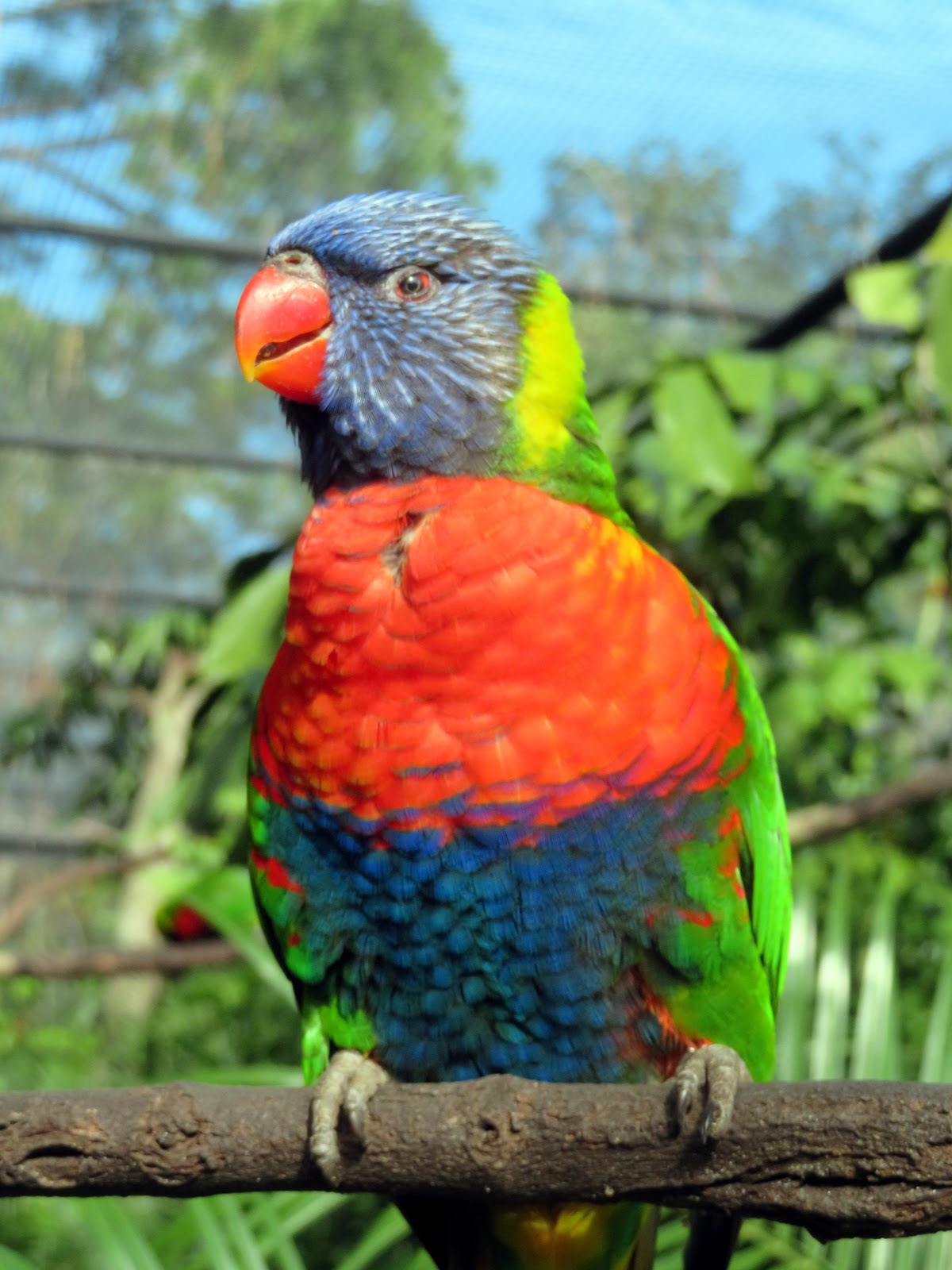
We went into a walk through aviary with lorikeets and one with cockatiels. Visitors can purchase sugar water for the lorikeets and seed sticks for the cockatiels while walking through the exhibit. There was a large cockatoo outside that would laugh and do flips on the perch. 

In all, we spent about three hours in the zoo, staying until around 12:30 when we found a picnic table outside the zoo entrance where we had our peanut butter sandwiches and fruit for lunch.  Day was sunny and pleasant and we enjoyed the company of our friends, Steve and Marcia.

After lunch we made the 2 ½ hour drive back to Steve’s house in Sebring.  The sunny afternoon made a pleasant drive west across routes 60 and 98.  We especially liked the small town of Yeehaw Junction along the way.

After unpacking from our trip, Mary and I walked northeast along Lake Jackson doing a 3 mile walk that Steve does on many days.  We stopped briefly at the public beach and chatted with a nice couple form Minnesota.  We were still interested in walking after returning so we continued southwest on Lakeview Drive to a community center area where there is a library, theater, fishing pier and public beach.  We walked past some interesting homes and several large live oak and banyan trees.  

We went to dinner with Steve and Marcia at one of their favorite restaurants in Sebring.  We had been to Dimitri’s Restaurant with them in 2019 and enjoyed it very much.  Steve had a lasagna, Mary and Marcia had Cuban sandwiches and I had a fish sandwich.  Several of us had their Greek lemon rice soup, which was quite good. We all agreed that the meal was excellent and did well to finish.  After our meal the waitress gave each all take-home servings of their rice pudding because of Steve’s military service.


Saturday, January 25, 2020

Canaveral National Seashore


We checked out of the St. Augustine Day’s Inn at 8:30 and headed south on the A1A (US 1) to explore Merritt Island and the Canaveral National Seashore.  The weather was in the 50s with a promise of being beautiful with temperatures approaching 70.   We enjoyed the drive along the oceanfront and watched the wind pushing waves up on the beaches.  

Because Steve would come to this area with his family nearly every summer when he was a child, he knew the area very well.  Even as an adult, he continued to have a great deal of affection for the Atlantic Coast of Florida, especially the Space Coast.  I recalled hearing him say many times that he hoped to live in the Titusville area some day.  He had a number of relatives who lived in the area, many of whom worked in various aspects of the aerospace program. He still has a few family members living in the Cocoa Beach area which gets him here from time to time.  We were happy to rely on his memory of backroads and places where we stood a good chance of viewing alligators and interesting birds. 

Our first stop was at Scragg’s Grove, a fruit stand in Oak Hill, Florida where we bought fresh picked navel oranges, pecans and boiled peanuts.  The two ladies at the store were both from West Virginia.  One lady was from near Morgantown and the owner and her husband were from Logan.  We had a nice chat with them and made our purchases of locally grown fruit.  They gave us directions to the Seminole Rest section of the Canaveral National Seashore. This historic area consists of a restored house from the 1880s that was built on an ancient Timucuan and Ais midden. These tribes lived in this area from about 2000 BC until 1565 AD.  Although the small visitor center didn’t open until noon the ranger let us in at 11 am. Mary bought a T-shirt and had her National Park Passport stamped. We enjoyed looking at the pine paneling and the old glass in the windows. 

After touring the building and visiting with the ranger, we had lunch in the parking lot. We still had plenty of lunch fixings from our Winn Dixie visit when we started the trip. We were having our usual peanut butter and crackers when an older couple pulled into the parking lot in a car with Florida plates and a WVU bumper sticker.  We chatted with them and found out that they were from Whitesville, WV in Boone County and had retired to Central Florida. We enjoyed visiting with them before starting back south on US 1. 

Our next stop was at Playalinda Beach. The sunny Saturday had a lot of people out at the beach despite the cool breeze. Several people were fishing or playing volleyball. One man had a small kite flying, and a surfer was out in the waves. Lots of people were just walking on the beach like us. We didn’t stay at Playalinda very long and decided to continue to move on.  We did not stop at beach 13 which is the nude beach. We figured that the January wind was cool enough that no sane person would be nude today. 

We continued on US 1 to Haulover Canal to try to see some manatees.  Haulover Canal is a small manmade waterway connecting Mosquito Lagoon with the Indian River and Atlantic Ocean.  The canal was initially dug in the late 1800s but has since been moved, widened and deepened to accommodate the movement of cargo.  Because the water is usually shallow and warm, manatees congregate in the canal from time to time.  The National Park Service constructed an observation deck so visitors can observe manatees when they are in the waterway.  There were only a few manatees in the canal while we were at the canal so we didn’t stay long. 

When we entered the Canaveral National Seashore area, we took the “Biolab Road” which took us 6 miles along the shore where there were a lot of alligators and birds.  We drove along slowly and spotted a number of alligators of all sizes and quite a few birds. 

We made a quick stop at the visitor center for the Canaveral National Seashore and picked up some information on the Black Point Wildlife Drive.  This one-way seven mile drive is one of the best places we know to see alligators, snakes and birds of all type.  While we were at the visitor center we walked out the boardwalk nature trail that was short but interesting. We saw signage for a number of plants that we had seen. We also saw a couple of alligators and several huge basking turtles. 

A short drive on US 1 took us to Gator Trail Road, a short gravel loop road. The area had several small to medium sized alligators and a number of cranes, egrets and ibis. The drive was very pretty and pleasant. 

We found the Black Point Wildlife Drive, an area very popular with birders. This seven mile loop had a good deal of traffic since there was a birder’s conference nearby. Like other areas that we visited, we saw many bird species and several alligators of all size. We had been to this drive when we were here in 2015.  At that time there was a large meeting of birders in the area and many of them were out on Black Point Road.  We learned that there is sometime similar this weekend with a large expo in Titusville where vendors were selling camera equipment and other items of interest to birders. Like five years earlier, there was several cars moving slowly along the road viewing birds, alligators and other interesting wildlife. Since this is a beautiful Saturday afternoon it was not surprising that there were more people in the area that usual.  We also learned that SpaceX would be doing a number of major launches beginning on Monday morning reportedly placing communication satellites that would provide high speed Internet to previously inaccessible areas. Some of the people in the area could be there to observe the upcoming launches. 

The seven mile drive around Black Point was very nice.  We cruised around with the windows open driving at near idle speed looking for interesting birds.  We saw a number of heron and egret species as well as many backing alligators of all sizes. This has become one of our favorite wildlife viewing areas in Florida since there is a helpful guide to specific sites along the drive and the number and variety of species on the drive.  

We left Black Point and continued back on US 1 driving to Titusville checking into the Titusville Day’s Inn by around 4:30. We drove by Dixie Crossroads restaurant on the way and noticed that they were already busy at 4 pm. While that isn’t surprising for South Florida restaurants, we considered that we may not be able to get in for dinner when we were ready after 6.  

Our rooms at the Day’s Inn were very nice and appeared to have been remodeled recently. The motel is just off I-95 which will be nice when we leave tomorrow morning.  After unloading the rental car, Mary and I went for a walk around the group of motels and restaurants at that exit.  It felt good to move around and work up an appetite before dinner.

We had several dinner ideas based on TripAdvisor reviews and decided to give them a call to see about wait times for a table at dinner.  Dixie Crossroads had a 90 minute wait time.  Mary called a local Cuban restaurant, El Leoncito, and learning that they had a 40 minute wait so we opted for a popular local diner with an American theme, Steve’s Family Diner.  Mary and I ordered Mahi Mahi, hers grilled, mine lightly battered and fried. Marcia had a strip steak and Steve had the seafood platter.  Although we all enjoyed our meals, no one was able to finish their dinner. We would highly recommend Steve’s Family Diner to anyone looking for a great meal at an affordable price in Titusville. 

We drove back to the Day’s Inn to rest up for our day at the Brevard County Zoo on Sunday. 


Friday, January 24, 2020

St. Augustine Alligator Farm and Zoological Garden


We awoke around 5 am this morning and did some reading and our German lessons in the room at the Day’s Inn. Breakfast was Raisin Bran, yogurt and bananas from the Winn Dixie. We called Steve and Marcia around 7:30 to confirm plans for the day. 

We decided to go to the St. Augustine Alligator Farm and Zoological Garden this morning when it opened at 9 am. We made the short drive on A1A to Anastasia Island and parked in the Alligator Farm parking lot. We were pleased that our membership in the Cincinnati Zoo got all four of us in at half price. Although we had been here just 5 years ago, we hadn’t remembered a lot of the displays and some things had been upgraded since we were here. For example, there is now a sloth display that wasn’t there before.  There were lots of displays of birds as well as a few lemurs and other mammals. Displays held many species of crocodiles and gavials as well as alligators.  Informative signage gave background on each species range, diet and description as well as the status of the population in the wild. 

We were impressed with the varieties of crocodilians and other reptiles but the qualities of the displays. The enclosures gave the animals a suitable habitat while allowing visitors on opportunity to see them and compare features with similar species. For example, we were impressed by the gharial crocodile which has a large heavy body but very long, very narrow mouths that seemed out of place. We learned that this species, native to India, is one of the larger crocodiles and subsists primarily on fish.

We went into the display to see the stuffed body of Gomek, the extremely large 80+ year old crocodile that resided at the alligator farm for many years. From there we went to see Gomek’s replacement, Maximo and his mate, Sydney. These two giant saltwater crocodiles are still young and may grow to surpass the size of Gomek. They were living the enclosure that was built for Gomek and seemed to have adapted well. 

We finished the day at a feeding at the swamp area. At noon, a keeper fed the alligators a mix of preformulated alligator food as well as large rats. The rats were held above the heads of the alligators on a string and the alligators jumped up to eat them. He gave an informative talk on the alligators and their nutritional needs for about 30 minutes started at noon. 

We arrived back at the Day’s Inn a little before 1 pm and had lunch of peanut butter and crackers as well as the cheesy grits and green beans from last night’s dinner.  After lunch Mary walked over to the Our Lady of La Leche Shrine and I walked into the nearby neighborhood to see if I could find a large tree that I remembered from here when we visited in 2015.  

We met Steve and Marcia at 2 pm to drive south on the A1A to go to the Fort Matanzas National Monument. There is a very small fort near the mouth of the Matanzas River to protect upstream towns and the Castillo de San Marcos from invaders. The rangers and volunteers at the park were very helpful and showed us a brief video history of the fort.  

Storm damage prevented us from taking the ferry over to the island to see the fort, but we could look at it from across the river at the visitor center.  Like the Castillo de San Marcos in St. Augustine, this structure is made of coquina and had fallen into disrepair until it was taken over by the park service and restored for visitors.   It was built by the Spanish in the 1740 and restored by the National Park Service in the 1920s.

We walked out to the beach area along the Matanzas River and looked across to the fort.  We saw a number of tracks from raccoons and other animals  We didn’t stay long since the beach area was small so we headed back to the car to drive the short distance to the parking area managed by the National Park with access to the beach on the Matanzas River as well as the Atlantic Ocean. The beach was very nice and clean.  Even though the weather was a little cool and there was a steady wind, there were several people walking at the beach, many with small dogs.

We picked up a few shells as we walked along and watched the shore birds picking in the sand. We walked down the beach on the river then went for a short distance on the Atlantic until we reached the parking lot.  The arrangement of the parking lots was nice since walkers could park at one lot then walk on the beach for about a mile ending up at a parking lot that is across the road from the starting point. 

We saw a rain cloud coming our way so we walked the last 100 yards or so at a faster pace to avoid the shower.  We saw cars in the parking lot with both West Virginia and Franklin County, Kentucky plates. It was a nice afternoon and it felt good to get moving. 

We drove the 27 miles from Matanzas Beach back to the Day’s Inn to clean up before dinner. There is a Denny’s Restaurant in our hotel, so we opted to go there since we were all tired. Everyone had a double cheeseburger with Mary and I splitting one. Steve and Marcia both had the wavy fries, but we split an order of onion rings. Everyone enjoyed their meals and came away full. We will get this cheeseburger again because it was well prepared and used very flavorful meat. 

We agreed to meet at 8:30 tomorrow morning to drive south on US A1A. We would spend Saturday in the Merritt Island area near Titusville just looking at wildlife. We are looking forward to the day.